
Music education has long been a field where technical mastery, theoretical knowledge, and expressive artistry converge. In today’s increasingly globalized world, however, educators are challenged not only to train skilled musicians but also to cultivate cross-cultural awareness and adaptability. Integrating diverse musical traditions, such as Indian classical music, into a Western framework requires innovative strategies that respect both the depth of tradition and the rigor of the conservatory-style music education system.
Blending Conservatory Rigor with Global Perspectives
Conservatory-style music education emphasizes structured progression, disciplined practice, and performance excellence. Students develop through graded technical studies, ensemble participation, solo repertoire, and regular public performances. This framework provides an ideal scaffold for introducing cross-cultural elements. For instance, integrating Indian classical ragas into piano or string pedagogy allows students to explore modal systems beyond Western tonality while maintaining the disciplined approach of scales, arpeggios, and exercises. Educators can design curricula where students alternate between Western and non-Western techniques, ensuring that skill acquisition remains cumulative and measurable.
Curriculum Design for Cross-Cultural Literacy
Effective cross-cultural engagement begins with curriculum planning. Music educators can incorporate world music modules alongside traditional Western theory. In such programs, students analyze rhythm, melody, and ornamentation across cultures, contrasting Western classical meter with Indian tala patterns. Assignments can include transcription exercises, comparative listening, and performance projects that combine stylistic elements from multiple traditions. For example, a conservatory-style music education course may ask students to perform a Western sonata infused with improvisatory passages inspired by Indian classical motifs, fostering both analytical thinking and creative expression.
Technical Mastery Through Diverse Modalities
Technique is central to conservatory training. Adapting it for cross-cultural engagement involves expanding the technical vocabulary to include the nuances of other traditions. In Indian classical music, microtonal inflections, glides (meend), and complex ornamentation require refined auditory perception and finger control. By integrating these technical challenges into daily practice, students enhance dexterity, intonation accuracy, and expressive capability. Exercises can be devised where scales and arpeggios incorporate non-Western intervals, or rhythmic drills incorporate additive and asymmetric cycles, mirroring Indian tala structures. This technical expansion complements the Western focus on precision and articulation while broadening musical sensibilities.
Ensemble Experiences as Cultural Laboratories
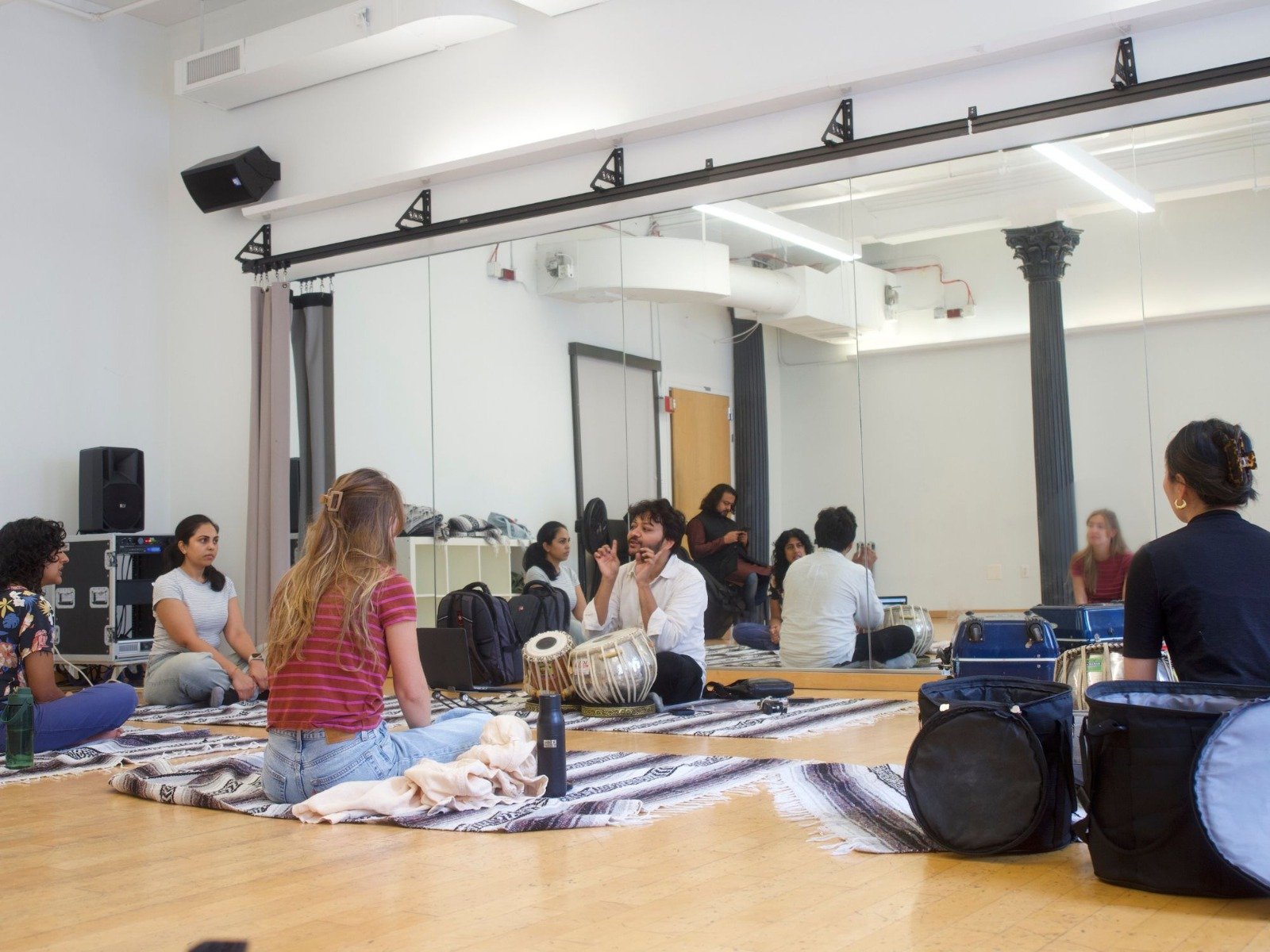
Ensemble participation provides a fertile ground for cross-cultural learning. Western ensembles, whether orchestral or chamber, can collaborate with students trained in Indian classical instruments such as sitar, tabla, or bansuri. Structured rehearsals enable students to navigate differing approaches to timing, phrasing, and improvisation. For instance, a string quartet may experiment with tala-inspired rhythms while a tabla player introduces rhythmic cycles that challenge traditional Western meter. Such collaborations cultivate listening skills, adaptability, and mutual respect, transforming the ensemble into a microcosm of global musical dialogue.
Performance as a Bridge Between Traditions
Live performance is a hallmark of conservatory-style music education and an effective medium for cross-cultural engagement. Concerts and recitals that feature fusion projects allow students to demonstrate technical mastery while exploring cultural contexts. Educational programming might include lecture-recitals where performers explain the structure and historical background of the Indian classical pieces they interpret. Alternatively, collaborative improvisations between Western and Indian-trained musicians can highlight contrasts and complementarities in technique, phrasing, and tonal color. Audiences, in turn, gain a deeper understanding of cultural diversity within music.
Pedagogical Approaches for Inclusive Learning
Teachers play a pivotal role in facilitating cross-cultural understanding. Pedagogical strategies should encourage curiosity, contextual knowledge, and active listening. One approach is comparative pedagogy, where students analyze and perform similar musical forms across traditions, identifying structural and aesthetic differences. Another approach emphasizes mentorship, inviting Indian classical musicians as visiting instructors to provide authentic instruction and cultural insight. Through masterclasses and interactive workshops, students internalize subtle performance practices that textbooks alone cannot convey. These strategies promote empathy, cultural literacy, and respect for musical traditions beyond their own.
Assessment and Progression in a Cross-Cultural Framework
Maintaining the rigor of conservatory-style music education requires thoughtful assessment methods. Evaluations should measure both technical proficiency and interpretive understanding of cross-cultural material. Rubrics can include criteria for rhythmic accuracy, tonal control, stylistic fidelity, and improvisational responsiveness. Portfolios and reflective journals encourage students to articulate their learning process, documenting how exposure to different traditions shapes their musical identity. By integrating these assessments into regular progression benchmarks, institutions ensure that cross-cultural engagement enhances rather than disrupts the established pedagogical trajectory.
Leveraging Technology for Global Connections
Digital tools and online platforms can further enhance cross-cultural music education. Virtual collaborations allow students to interact with peers and mentors worldwide, sharing performances, feedback, and instructional materials. Software for rhythm and pitch analysis can assist in understanding non-Western modalities, while multimedia resources offer historical and cultural context. Blending traditional conservatory pedagogy with modern technology ensures that cross-cultural engagement is both rigorous and accessible, accommodating diverse learning styles and geographical boundaries.
Cultivating Lifelong Cross-Cultural Musicianship
Ultimately, the goal of integrating cross-cultural strategies within conservatory-style music education is to cultivate musicians who are versatile, culturally informed, and expressive. Students trained in this environment not only achieve technical excellence but also develop the sensitivity to engage with musical traditions authentically. Exposure to Indian classical music and other global forms broadens interpretive possibilities, encourages improvisational creativity, and fosters a holistic understanding of music as a universal language. By prioritizing structured learning while embracing cultural diversity, educators prepare students for meaningful careers in performance, pedagogy, and research across a globalized musical landscape.
Cross-cultural engagement in music education is not a supplemental activity but a core dimension of modern conservatory training. Through curriculum innovation, technical expansion, ensemble collaboration, performance exploration, and reflective pedagogy, institutions can create a learning ecosystem where Western rigor and Indian classical tradition coexist harmoniously. Such strategies ensure that students emerge as musicians who are not only technically proficient but also culturally literate, adaptable, and inspired to contribute to a vibrant, interconnected musical world.
This approach demonstrates that conservatory-style music education can evolve beyond traditional boundaries, fostering musicians who honor heritage while embracing innovation, ultimately shaping a new generation of globally conscious artists.