
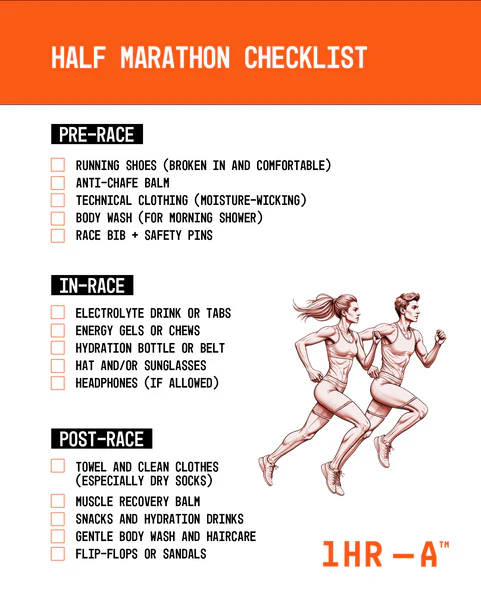
The bib is pinned. The shoes are broken in. The nutrition plan is dialed. The one item on the checklist that gets the least attention is the one most likely to end your race early.
Underwear failure at mile ten of a half marathon doesn’t produce a problem you can run through. It produces one you’ll remember for two weeks.
Why Underwear Matters More Than Shoes for Chafe Risk
Shoe fit is the most discussed half marathon preparation topic. Blister management is a close second. Neither of these is the most common cause of race-ending chafe events.
Underwear is.
The physics of the problem: a half marathon takes most recreational runners 1:45 to 2:30. During that time, each inner thigh takes thousands of steps. Each step involves fabric contact. If the fabric generates friction, those thousands of contacts accumulate into a single serious skin breakdown event.
Running shoes are designed by their manufacturers specifically for running. Shoe fit is evaluated for running conditions. Your underwear was selected with no race-day criteria applied. The asymmetry between these two evaluations explains why blister advice fills race guides and underwear advice doesn’t.
The runners who’ve suffered serious chafe at mile seven don’t need to be convinced. The runners who haven’t yet are the target audience for this checklist item.
Lubricants treat the symptom. Fabric choice prevents the problem.
Anti-Chafe Underwear Criteria for Race Day
Fiber Surface Character Under Sustained Friction
The friction coefficient of fabric against skin determines how quickly friction accumulates into abrasion. Natural fiber underwear has a lower friction coefficient than synthetic mesh and microfiber fabrics, particularly as temperature and moisture levels rise during sustained running. The distinction becomes meaningful after mile four.
Seam Placement and Construction
Seams at the inner leg opening, the seat, and across the waistband are all potential chafe sources during a long run. Flatlock seam construction sits flat against the skin. Raised seams create pressure ridges that generate targeted abrasion with every stride. Organic cotton boxers with flatlock stitching at all seam locations eliminate the most predictable chafe source before the race starts.
Waistband Stability Through 13.1 Miles
A waistband that rolls on a seven-mile training run will fail at mile eight of a half marathon. The waistband needs to stay flat and positioned through the full duration of the race regardless of pace changes, aid station walks, and hill climbing that creates different body positions than flat running.
Moisture Management Without Saturation
You will sweat significantly over the course of a half marathon. Your underwear will get wet. The question is whether it holds that moisture against your skin or manages it to the surface. Natural fiber moisture management keeps the fabric from becoming a saturated mass that loses all its anti-friction properties.
Length for Inner Thigh Coverage
Boxer briefs provide inner thigh coverage that briefs don’t. For the inner thigh friction that causes the most common race-day chafe events, that coverage is the primary prevention mechanism. Length also determines whether the leg opening sits at a chafe-prone location or out of the primary friction zone.
Race Day Checklist Integration
Test your race day kit during a long training run two to three weeks out. Never wear untested gear on race day. This is universally understood for shoes. Apply it equally to underwear. Wear your intended race day underwear on your final long run before taper.
Add body glide as supplemental insurance, not primary prevention. The right fabric choice significantly reduces chafe risk. Body glide at the inner thighs and waistband is additional protection that makes sense for distances above ten miles. Organic cotton boxers plus body glide is a more reliable combination than synthetic underwear plus body glide.
Choose sizing for your racing condition, not your resting state. Your waist and thighs expand slightly during the later miles of a half marathon due to muscle engagement and hydration fluctuations. Size your race day underwear for a slight comfort margin rather than a snug athletic fit.
Prepare your post-race transition. Changing out of race clothing within thirty minutes of finishing prevents post-race chafe from extending into a skin damage situation. Have fresh underwear in your race day bag.
Evaluate your summer vs. winter race conditions differently. Higher ambient temperature races generate more sweat and create more aggressive friction conditions than cool weather races. If you’re racing in summer, the breathability and moisture management criteria are more critical. Adjust your underwear choice accordingly.
Why This Is the Conversation Race Guides Skip
Race preparation guides are written by runners. Runners who’ve learned their lessons the hard way tend to write about blister prevention, hydration strategies, and taper anxiety. The underwear conversation is embarrassing enough as a topic that it doesn’t get the attention it deserves in mainstream race preparation content.
The embarrassment of discussing underwear is inversely proportional to the severity of the problem when you get it wrong.
Half marathon chafe is not a mild inconvenience. It is a genuine injury that can require days of wound care and prevents running for a week or more. The prevention is simple. The conversation is not being had.
Your race day checklist is complete when every item on it has been evaluated against race-day criteria. Underwear is the last item most runners evaluate. After reading this, it should be near the top.